

Overview
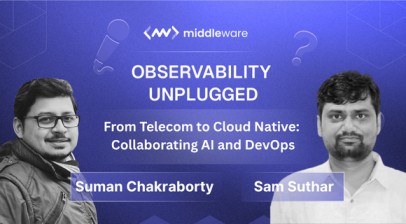
Suman Chakraborty is a Solutions Architect at Platform9, specializing in setting up and migrating customers to Kubernetes and modern microservice architectures. With a background spanning core telecom engineering (Nokia, Ericsson) to IT architecture, Suman has spent over a decade developing expertise in Linux, open-source cloud platforms (OpenStack, Mesos), and modern DevOps practices. He is a recognized community contributor focused on helping organizations transition to scalable, resilient, cloud-native environments.
What We Talk About
- Suman’s career journey from a core telecom engineer to a cloud-native architect emphasizes how self-taught expertise in Linux and open-source paved the way.
- The business and technical drivers for Kubernetes adoption, and why it is not the ideal solution for every single application workload.
- Platform9’s role in the private cloud space, including helping customers migrate off proprietary hypervisors like VMware ESXi to open-source KVM.
- The critical shift from reactive, old-school monitoring to the proactive, deep observability required to manage today’s highly complex, distributed microservices.
- How to prevent embarrassing production outages by moving away from manual operations and implementing a strict GitOps and version control strategy for all infrastructure changes.
- The future of AI in DevOps, viewing it as an automation “glue” that is built upon—not a replacement for—the foundational technologies of the cloud-native world.



Podcast Highlights
Career as a Journey: From Telecom to Cloud Native
- Suman started in core telecom (Nokia, Ericsson) but pivoted to IT/System Administration around 2012 following industry changes, demonstrating the value of career adaptability.
- He credits a strong, self-gained foundation in Linux (calling it the “Bible of the DevOps”) for his ability to master new, open-source cloud technologies like OpenStack and Mesos.
- He stresses that continuous learning is non-negotiable, as tech evolves so fast that one cannot assume a current technology will be relevant in five years.
Kubernetes: When and Why to Adopt
- The fundamental reasons for adopting Kubernetes should be the application stack type (preferably stateless) and the inherent need for automated scaling capabilities (HPA/VPA).
- Suman advises a balanced approach, noting that K8s is not a universal fit; some cost-optimized workloads, even at large cloud providers, are more efficiently run on simple VMs.
- For companies with limited resources, the strategy should be to host applications on Kubernetes while offloading complex, stateful services like databases to managed services offered by cloud providers.
The Observability Shift in Microservices
- Traditional monitoring (e.g., Nagios, Xenos) was reactive: it mostly checked if a service was alive and typically only alerted after a complete failure.
- Modern observability is proactive and essential for microservices: tools like Prometheus scrape detailed metrics, logs, and traces from every component. This allows teams to detect leading indicators of failure (like increasing RAM usage) and solve them before a full outage occurs.
Preventing Outages with GitOps
- Suman shared an “embarrassing” past incident where a live production service failed due to a manual, untracked command executed by a team member.
- The solution to such human-caused vulnerabilities is strict adoption of GitOps: every action—from infrastructure provisioning to cluster configuration—must be version controlled, tracked via pull requests, and fully audited.
AI and the Core DevOps Skills
- AI is playing an increasing role in DevOps, with emerging concepts like Model Context Protocol (MCP) automating administrative work.
- Suman believes AI acts as a “glue” to existing technology. For new DevOps engineers, mastering the core basics is paramount: Linux, CI/CD, Docker/Kubernetes, Infrastructure as Code, Configuration Management, and Observability tools.